


04 Feb The Red Giant: Why Osvaldo Patrizzi’s White Cartier Bianco is Still the Final Word
Posted at 06:32h
in Collecting
If you spend much time hunting for vintage Cartier, you quickly hit a wall. The brand’s history is famously guarded, and while yellow gold Tanks are everywhere, the truly rare pieces, those cast in white gold and platinum, can feel like ghosts. In 2006, Osvaldo Patrizzi decided it was time to pin those ghosts down.
The result was White Cartier Bianco, published by Antiquorum Editions. This isn’t just a book: it’s a 568-page brick of a reference that changed the way we think about watch books. If you are serious about the “Jeweler of Kings,” this large red volume is the one you need on your shelf.
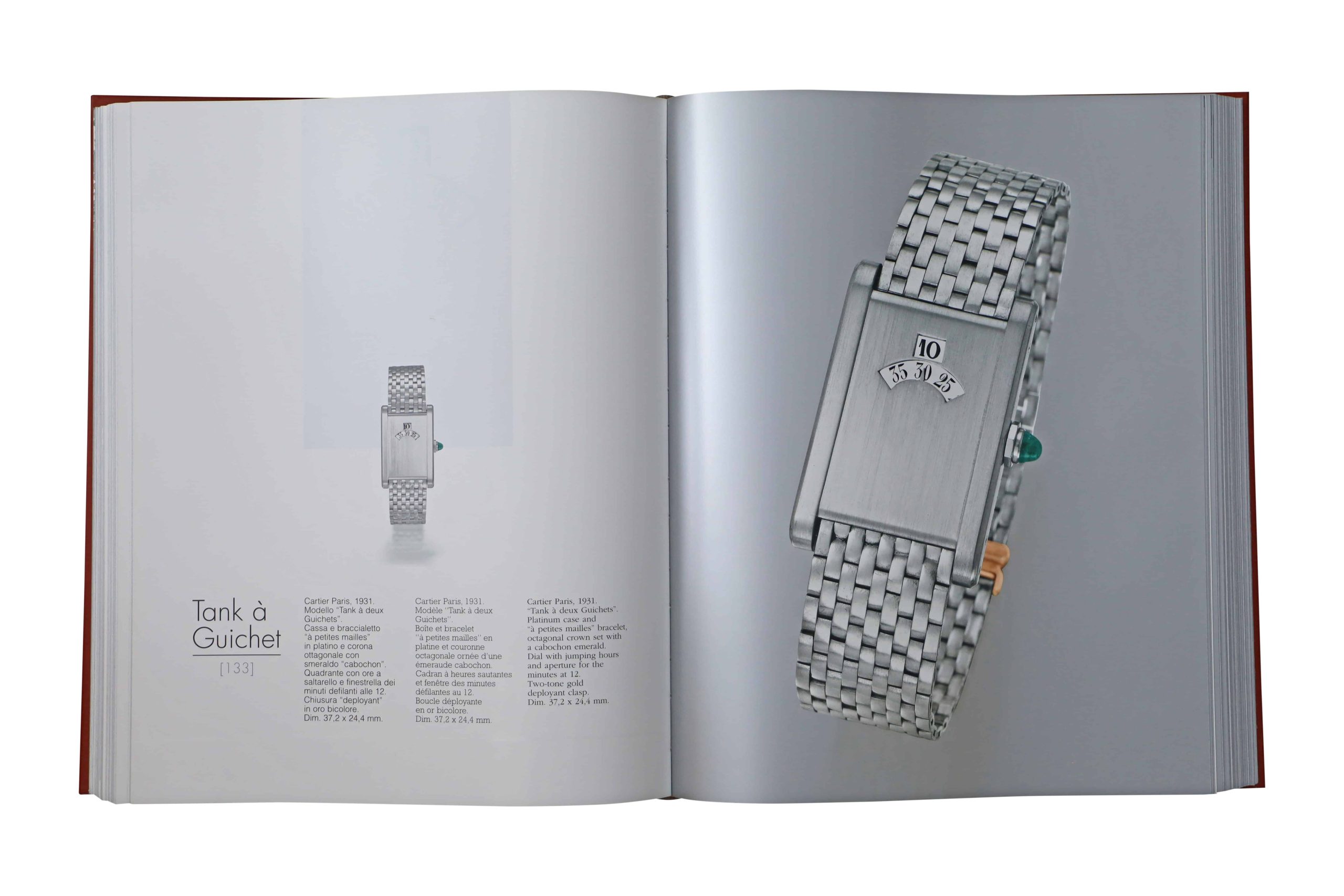

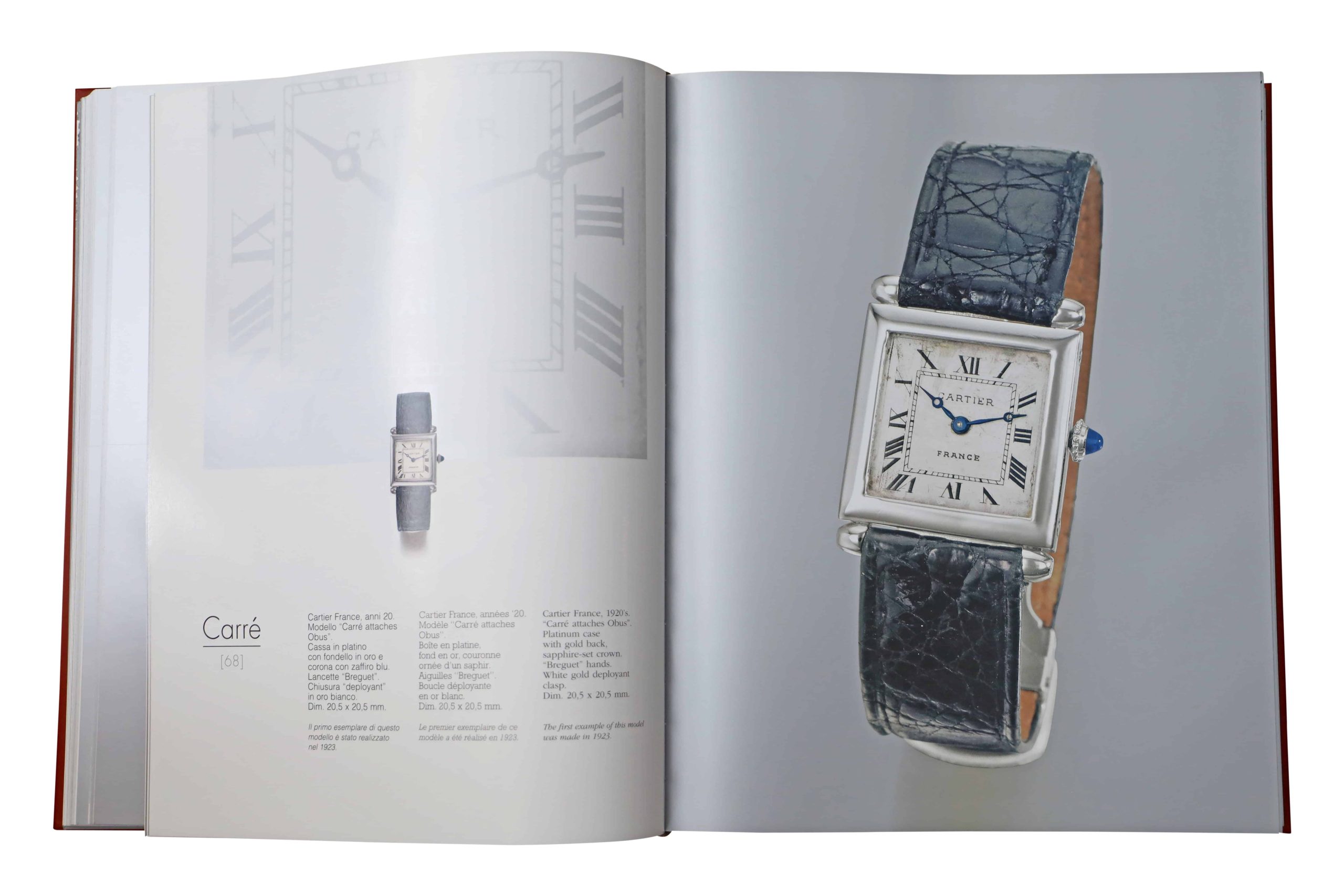
 The 2006 edition is a massive 24.5 x 31 cm. Why does size matter? Because Cartier is a house of details. In this large-format version, the 255 full-page color illustrations allow you to see the grain of the guilloché dials and the specific patina on the Breguet-style hands.
There are also smaller reference images that act as a visual database for some of the rarest configurations ever produced. It is written in English, French, and Italian, which is a nod to the three pillars of the vintage watch market. It feels substantial in your hands, much like the watches it documents.
The 2006 edition is a massive 24.5 x 31 cm. Why does size matter? Because Cartier is a house of details. In this large-format version, the 255 full-page color illustrations allow you to see the grain of the guilloché dials and the specific patina on the Breguet-style hands.
There are also smaller reference images that act as a visual database for some of the rarest configurations ever produced. It is written in English, French, and Italian, which is a nod to the three pillars of the vintage watch market. It feels substantial in your hands, much like the watches it documents.
The Pedigree of a Pioneer: From 1974 to Antiquorum
To understand why this book is so important, you have to look at the man behind it. Before Osvaldo Patrizzi arrived on the scene, the watch world was a much quieter, slower place. His path in Geneva started in 1974, when he cofounded the Galerie Genevoise D’horlogerie Ancienne. This was the original foundation for everything that followed. In 1981, that gallery was renamed to Antiquorum, and the modern era of watch collecting was born. That same year, Patrizzi organized the first-ever auction in the world dedicated strictly to wristwatches. Until then, wristwatches were commonly treated as secondary to pocket watches or jewelry. Patrizzi saw them as mechanical art. He was the first to realize that a high-quality, scholarly catalog was the most powerful tool a collector could own. By the time he authored White Cartier Bianco in 2006, Patrizzi had already spent decades authenticating the most complex timepieces on earth. He wasn’t just a writer: he was the expert who basically built the market for the watches you see in his books today.Beyond the Yellow Gold Standard
For decades, the collector market was obsessed with the warmth of 18k yellow gold. White metals were often seen as outliers, almost like special orders that didn’t fit the main narrative. Patrizzi realized that these “white” models represented Cartier at its most sophisticated and architectural. He didn’t just collect photos: he put together a history of how Cartier used white gold and platinum to play with light and form. When you open this book, you aren’t looking at a simple list of watches. You are seeing a definitive look at how one of the world’s most famous houses handled its most precious materials.The Physicality of the 2006 Edition
Why Collectors Still Reach for the Large Red Book
Expertise in the watch world is built on what you can prove. Patrizzi’s work here provides the proof for collectors. When you’re looking at a white gold Tank Cintrée from the 1920s or a rare Asymétrique, you need to know what the original dial proportions looked like. This book provides that baseline. The scholarship here reflects a time when Antiquorum was at its peak, pushing the boundaries of what we knew about Cartier’s production. It covers the evolution of case design and the subtle shifts in typography that help a collector distinguish a mid-century masterpiece from a later reissue.A Legacy of Horological Scholarship
Owning White Cartier Bianco says something about your approach to the hobby. It suggests you aren’t just following trends, but that you value the archival research that makes horology so rewarding.
When you see this volume in a library, you know the owner appreciates the specific elegance of Cartier’s platinum and white gold creations, a side of the brand that is understated, incredibly rare, and eternally classic. It is a guide for the collector who prefers cool, silver tones over flashy yellow gold.
If you’re building a library that balances beauty with hard facts, this is your cornerstone. It’s a reminder that even in a digital world, nothing beats the clarity of a high-quality print and the insight of a master like Osvaldo Patrizzi.
Related Post:
Watchmaking Books: A Comprehensive Guide for Watch Enthusiasts
